The Fallacy of the 99% Accuracy: Why a 1% Legal AI Error Rate Can Bankrupt Your Business

August 13, 2026
The global legal tech sector reached a regulatory milestone this August as key provisions of the European Union’s AI Act officially went into effect. The new framework forces AI developers like Anthropic to implement machine-readable watermarking and automated compliance logs. Alongside these regulatory shifts, product innovation continues to scale: Relativity announced claiR, a conversational AI interface allowing lawyers to query massive datasets using plain language and receive cited, auditable answers directly from the source record. Yet, even as legal AI becomes more sophisticated, a recent judicial audit of Canadian Federal Court decisions highlights a sobering reality: out of 2,500 rulings, researchers identified 38 incorrect neutral citations—emphasizing that even when error rates are low, errors in legal files carry severe risks of being blamed on AI hallucinations, threatening judicial trust.
These three updates highlight a central theme for businesses navigating the modern legal landscape: AI efficiency is essential, but a 1% error rate can be catastrophic.
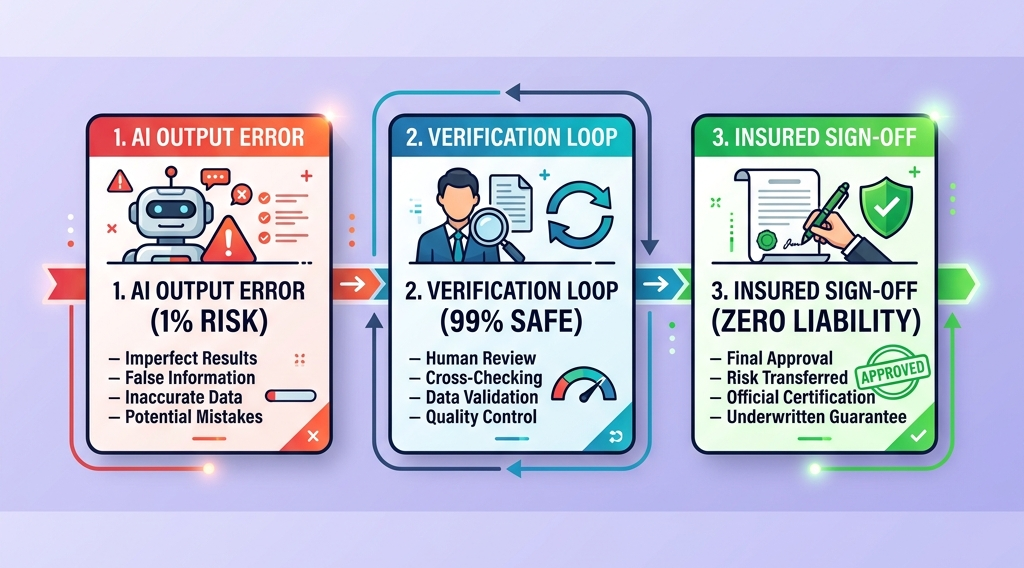
1. The EU AI Act: Regulation Demands Structural Disclosures
The implementation of the EU AI Act (effective August 2, 2026) marks a permanent shift in how software-based automation must operate. For developers, transparency is no longer optional. The act mandates clear disclosures, auditable logs, and machine-readable markers on automated outputs.
For small and medium enterprises (SMEs), this means the era of using unchecked, “black-box” AI systems to manage business-critical risk is coming to an end. Regulators are clamping down on software-only systems that operate without oversight. If your business depends on automated contracts or disclosures, you must ensure your workflows are isolated in secure, private compliance sandboxes that align with these rising international safety standards.
2. Relativity claiR: The Shift to Grounded, Auditable AI
To combat the massive risks of AI hallucinations in litigation, Relativity launched claiR, a conversational AI interface designed to query entire RelativityOne datasets. Rather than generating syntheses based on general knowledge, claiR answers questions by linking directly to the specific source document and paragraph.
This development confirms what legal tech experts have argued for years: raw LLMs without grounding are obsolete. If you ask an AI tool to write or review a contract, and it cannot link every clause to a verified state or provincial regulation, it is a liability. Businesses need grounded AI systems operating in private environments where data is protected and outputs are fully traceable.
3. The 1% Error: Why Canadian Judicial Audits Demand Human Sign-Off
In Canada, a recent research audit of 2,500 Federal Court decisions found a tiny margin of error—just 38 incorrect citations. While a 98.5% accuracy rate is considered excellent in most tech fields, in the legal space, it is a massive liability. Legal experts warned that even if errors are human, they are increasingly being blamed on AI “hallucinations,” undermining the credibility of the entire filing.
If a court filing has a single hallucinated citation, the lawyer faces immediate sanctions. If a business contract has a single incorrect clause, the agreement can be ruled void, exposing the company to thousands in damages. Traditional legal tech tools write in their terms of service that they are “not legal advice” and disclaim all liability. They expect the user to bear the risk of that 1% error.
The EqualDocs Strategy: Insured Lawyer Sign-Off, Amplified by AI
These updates prove that automation without accountability is a gamble. EqualDocs bridges this gap by combining advanced AI speed with the security of a licensed law firm:
- 100% Accountability: Unlike software tools that disclaim all liability, EqualDocs Avocats inc. is a licensed law firm covered by professional liability insurance. We use secure, grounded AI to accelerate the drafting process, but licensed human lawyers review and sign off on every document. We take responsibility.
- Secure Sandboxing: Your sensitive business data and contract drafts are managed in isolated environments, ensuring your intellectual property is never leaked to public training models.
- Predictable Pricing: We replace the stress of 0, Pro at $19.99/mo).
Do not let a 1% AI error put your business at risk.