Specialized AI Engineering and Private Sandboxes: The New Frontiers of Legal Tech (And What They Mean for SMEs)

August 10, 2026
The legal technology landscape is undergoing a massive shift from generalized chatbots to highly specialized, secure infrastructures. Today, two major developments highlighted this trend: Harbor, a leading legal technology consultancy, launched a specialized service called “Deploy” to provide dedicated Forward Deployed Engineers (FDEs) for custom legal AI engineering. At the same time, Y Combinator announced the acceptance of several legal AI startups into its Summer 2026 cohort—headlined by Perceptron ML, a startup building private, secure AI systems to safeguard law firm and corporate compliance data. Meanwhile, in the regulatory space, the UK government launched a new “AI Growth Lab” regulatory sandbox to help innovators test and scale compliant legal AI solutions under supervision.
While these milestones indicate that the legal tech ecosystem is mature and highly capitalized, they also expose a growing gap: the technology is becoming more expensive and complex, leaving small and medium-sized enterprises (SMEs) struggling with unsafe “do-it-yourself” AI or cost-prohibitive traditional law firm rates.
Here is what these developments mean for your business, and how EqualDocs bridges this gap.
1. Harbor’s ‘Deploy’: Off-the-Shelf AI is No Longer Enough
On August 10, 2026, Harbor officially launched Deploy, a service offering specialized Forward Deployed Engineers (FDEs) to help law firms build, evaluate, and integrate custom large language model (LLM) workflows. Harbor’s move is a direct response to a growing realization in the industry: off-the-shelf AI models are not plug-and-play. They require deep, specialized engineering to prevent hallucinations, secure data inputs, and actually deliver reliable outputs.
For SMEs, this is a wake-up call. If multi-million dollar law firms need specialized engineering teams just to make AI models work safely and reliably, then startup founders and small business owners cannot expect public, raw LLMs (like ChatGPT or Claude) to safely review their commercial contracts.
When you paste an unshielded contract or a sensitive vendor dispute into a public AI window, you are exposing your business’s proprietary data to public model training. Furthermore, public models offer zero professional accountability—their terms of service explicitly disclaim all liability. If a raw LLM hallucinates and misses a critical limitation of liability clause, OpenAI or Anthropic won’t cover your legal exposure. You are left holding the bill.
2. Y Combinator’s Summer ’26 Cohort: The Push for Private Data Sandboxes
Y Combinator’s acceptance of Perceptron ML into its Summer 2026 cohort further validates the industry’s shift toward data isolation. Perceptron ML builds private, self-hosted AI systems that insulate corporate and law firm data from public models. This trend is driven by a simple reality: corporate clients and partners are now auditing data handling policies before they sign any vendor agreements.
For growing businesses and exporters, data security is no longer just a legal detail—it is a sales blocker. If your partners, investors, or clients discover that you are processing their NDAs, employment agreements, or business compliance workflows through unshielded AI tools, they will walk away. SMEs need access to private, sandboxed workspaces where their data is completely isolated and protected under strict confidentiality agreements.
3. The UK AI Growth Lab: Compliance is Now a Sales Tool
In August 2026, the UK government, alongside regulators like the Solicitors Regulation Authority (SRA) and the Information Commissioner’s Office (ICO), launched the AI Growth Lab regulatory sandbox. The goal is to help developers and law firms test legal AI systems in a controlled environment to ensure strict compliance with data privacy and professional standards.
With the EU AI Act also becoming fully applicable this month, compliance has transitioned from a future planning item to an active enforcement reality. Exporters and tech startups must realize that regulatory compliance is actually a sales accelerator. Having a clear, multilingual audit trail (covering English, French, and Chinese compliance) and professional sign-offs is what allows you to win trust, pass enterprise compliance audits, and close international deals.
4. The EqualDocs Solution: AI Speed, Licensed Firm Accountability
The legal tech boom is creating a dangerous divide: massive enterprises are hiring FDEs and building custom private systems, while SMEs are left choosing between risky, unverified DIY AI or paying $500+/hour for traditional attorneys.
At EqualDocs, we built a different model. We are not just a software vendor; we are an AI-first licensed law firm (EqualDocs Avocats inc.) operating under professional regulatory standards. We combine specialized, sandboxed AI with licensed human lawyer accountability:
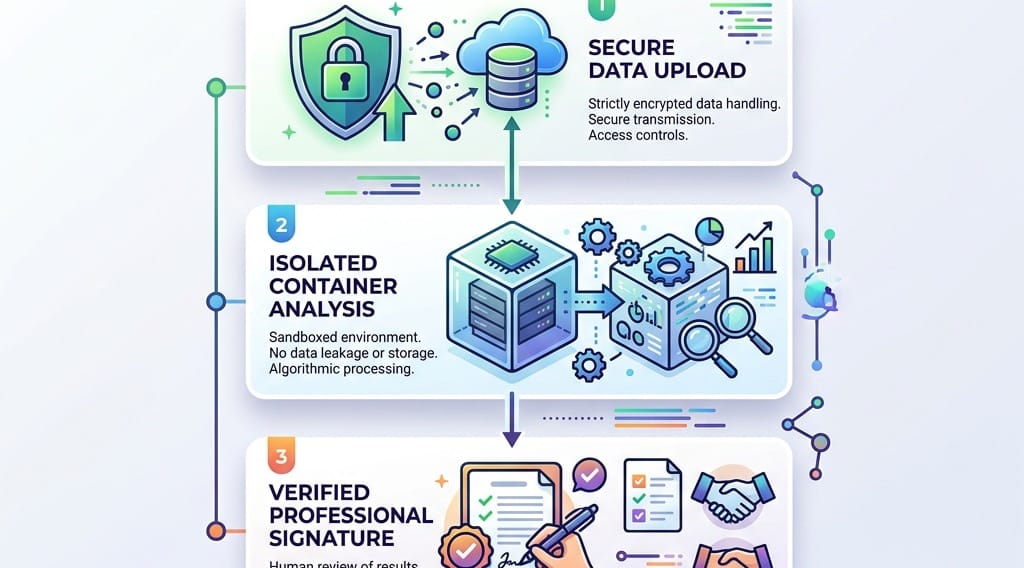
- Private, Secure Sandboxes: All contract reviews and compliance analyses are performed in secure, isolated containers. Your data is never used to train public models.
- Licensed Supervision & Liability Coverage: Our custom AI engines parse documents in seconds, but licensed human lawyers review and sign off on every deliverable. We assume professional liability, fully backed by professional indemnity insurance.
- Predictable, Flat-Rate Pricing: No hourly meters or billing surprises.
- Starter: $0/mo (200 EC) — Try out basic compliance assessments.
- Pro: $19.99/mo (1,000 EC) — Access private sandboxed templates and document generation.
- Enterprise: $299/mo (12,000 EC) — Direct lawyer supervision and high-frequency contract auditing.
Protect your business with AI efficiency and licensed firm accountability. Explore our services today at equaldocs.com.