Navigating the New Frontier: Customs Overhauls, Tense USMCA Talks, and Utah’s First “AI Law Firm”

June 4, 2026 — Welcome to the EqualDocs Daily Brief. Today, we are tracking three major shifts across international trade, legal technology, and regional consumer regulations that directly impact how small and medium-sized enterprises (SMEs) draft contracts, manage supply chains, and handle corporate compliance.
From the Oval Office to the salt flats of Utah, here is the breakdown of what happened and what it means for your business.
1. Customs Crackdown: The New Executive Order on Customs Reform
Yesterday, U.S. President Trump signed an Executive Order aimed at comprehensive customs reform, directing the Department of Homeland Security (DHS) and U.S. Customs and Border Protection (CBP) to aggressively combat duty evasion.
The “So What” for SMEs
The order introduces:
- Heightened Importer Vetting: More rigorous screening for foreign Importers of Record (IORs).
- Increased Bonding Requirements: Higher financial barriers to secure customs entry.
- “Good Standing” Mandate: Strict compliance benchmarks for companies importing goods into the United States.
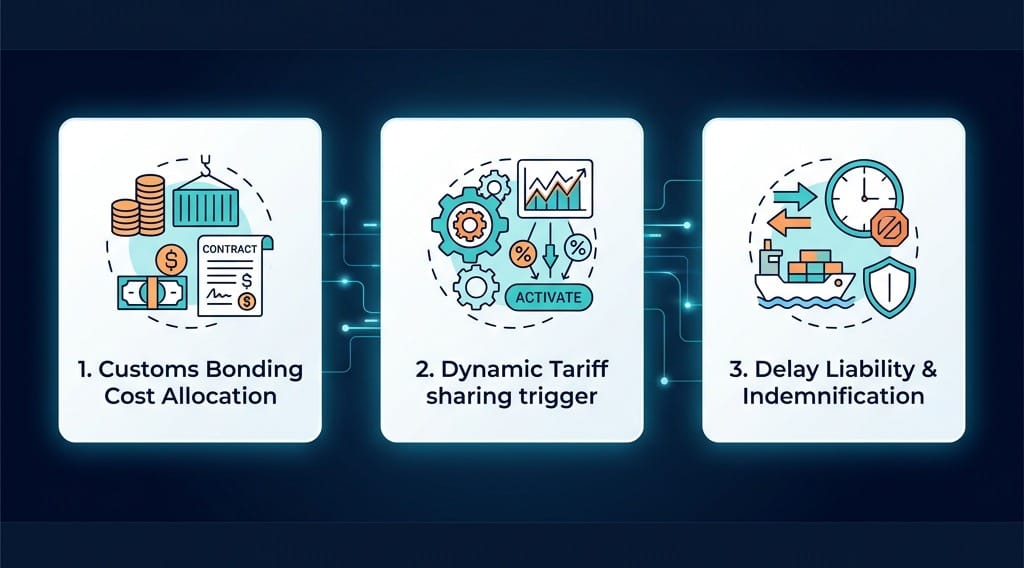
For cross-border SMEs, this means increased administrative friction and a higher likelihood of customs audits. If you rely on international suppliers, you must audit your procurement agreements immediately. Ensure your supply contracts clearly allocate the risk of customs delays, define who bears the cost of increased bonding, and outline indemnification procedures in the event of goods being held at the border.
2. Under Pressure: Tense USMCA Joint Review Negotiations
With the six-year anniversary of the United States-Mexico-Canada Agreement (USMCA/CUSMA) approaching on July 1, 2026, joint review negotiations have entered a tense phase. Canadian Trade Minister Dominic LeBlanc recently met with U.S. Trade Representative Jamieson Greer.
Canada is seeking a 16-year renewal of the agreement and relief from U.S. tariffs on steel, aluminum, and autos. However, Canadian officials are raising concerns that Canada is being sidelined in bilateral talks between the U.S. and Mexico, with the U.S. taking a firm stance that original terms are subject to change.
The “So What” for SMEs
The stability of North American supply chains is no longer a given. Small businesses operating across the U.S.-Canada-Mexico borders should prepare for policy volatility. In your long-term supply agreements, it is crucial to transition away from fixed-price models. Instead, implement dynamic tariff-allocation and cost-sharing clauses that trigger automatic renegotiations if tariffs or import duties exceed specified thresholds.
3. Legal Tech Innovation: Superlegal Launches Utah’s Regulated “AI Law Firm”
In a landmark development for legal technology, Superlegal has officially launched an AI-driven law firm under the authorization of the Utah Supreme Court’s Legal Services Innovation Sandbox.
Authorized to practice law under sandbox rules that permit non-lawyer ownership and tech-based legal services, Superlegal is targeting small and mid-sized businesses, particularly in the construction sector. It offers commercial contract review and redlining in under 24 hours. While powered by AI, the firm maintains an “attorney-in-the-loop” model, ensuring a qualified human lawyer reviews and signs off on every contract before delivery.
The “So What” for SMEs
This sandbox experiment (which runs until August 2027) represents a massive leap forward in making legal services affordable for smaller enterprises. SMEs can now access rapid, lawyer-approved contract reviews at a fraction of traditional firm costs. However, when onboarding AI-driven legal tools, always verify the vendor’s data sovereignty and confidentiality policies. Ensure your commercial agreements protect proprietary information and stipulate that your company’s data will not be used to train public language models.
4. Consumer Win: CRTC Bans Mobile and Internet Cancellation Fees in Canada
Starting June 12, 2026, the Canadian Radio-television and Telecommunications Commission (CRTC) is implementing new consumer protections that will make it significantly easier for Canadians to change or cancel telecom plans.
Under the new rules:
- Telecom providers are prohibited from charging activation, plan-change, or cancellation fees.
- Providers must offer pro-rated refunds for the unused portion of a billing cycle upon cancellation.
- Customers can cancel services immediately without being forced to give 30 days’ notice.
The “So What” for SMEs
While this is a major win for consumer flexibility, business owners must note that these rules do not erase outstanding hardware financing balances or the obligation to return rented equipment. If your business provides subscription-based digital or physical services, this regulatory shift sets a new standard for customer expectations. Review your own terms of service to ensure cancellation flows are transparent, fair, and compliant with regional consumer standards to avoid regulatory scrutiny.
At EqualDocs, we help businesses stay compliant and draft resilient agreements in a rapidly changing legal landscape. Keep your business protected by auditing your templates today at equaldocs.com.