Grounded Fact vs. Fictitious Speed: Why the Legal Sector is Locking Down Software-Only AI

August 12, 2026
The legal technology landscape is undergoing a massive push toward structural grounding, automated intake, and strict regulatory accountability. Today, three major developments highlighted these shifts: Y Combinator Summer 2026 cohort welcomed Perceptron ML, a startup building private, firm-controlled AI systems with dedicated “grounding engines” designed to verify legal citations and eliminate hallucinations. Simultaneously, startup Paravoemerged from stealth, launching an “AI revenue engine” for law firms to capture potential clients by automating missed calls and instant follow-ups. In the regulatory space, the High Court of Ireland issued a new practice direction (HC 142), mandating that all AI-assisted materials in court filings must undergo human lawyer verification, reinforcing that technological ignorance is no defense for legal errors.
These milestones prove that while AI efficiency is scaling rapidly, the legal sector is actively locking down software-only systems that carry no liability.
1. Perceptron ML & the Rise of Grounded Legal AI
As part of the Y Combinator Summer ’26 cohort, Perceptron ML emerged to address one of the most critical vulnerabilities of generative AI in professional settings: hallucinations. Instead of relying on general-purpose public LLMs, Perceptron ML builds private, firm-controlled systems with a built-in “grounding engine” to verify legal citations against real, primary case law.
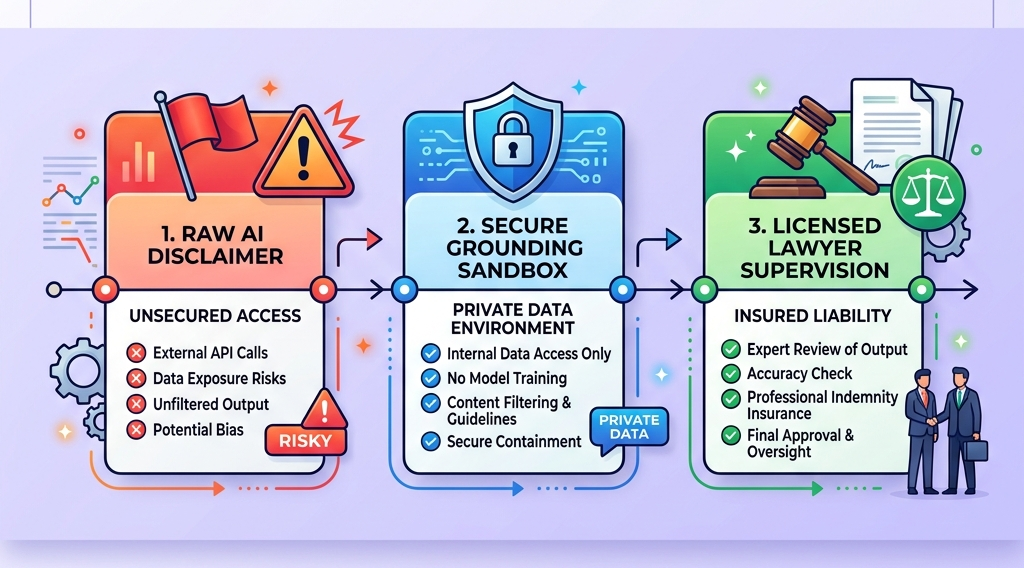
For small and medium enterprises (SMEs), this highlights a major truth: raw public AI tools (like ChatGPT or Claude) are unsafe for business agreements. If an AI tool lacks a grounding framework, it will eventually hallucinate clauses, miss local regulatory changes, or expose your critical prompts for public model training.
Business owners need secure, private sandboxes where their intellectual exhaust—sensitive data, prompts, and drafts—is strictly isolated.
2. Paravo and the Value of Automated Client Intake
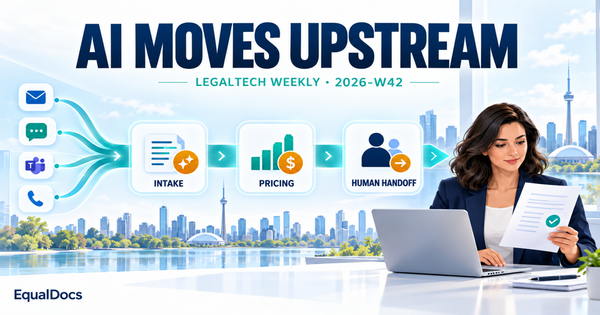
Startup Paravo launched its “AI revenue engine” on August 6, 2026, aimed at helping law firms capture leads by automating initial client intakes, missed call responses, and follow-ups. Paravo highlights how AI is reshaping the business development side of legal services: reducing the friction and cost of client intake to zero.
For businesses looking for representation or contract reviews, this intake phase is often the most frustrating step. SME owners want immediate answers: Do I actually need a lawyer? What is this going to cost?
This is why EqualDocs provides a free AI client intake system. It allows businesses to get instant, multilingual assessments of their matters before any legal billing begins.
3. Ireland’s HC 142: High Court Mandates Human Accountability
Ireland’s High Court issued Practice Direction HC 142 (effective September 1, 2026) to regulate the use of generative AI in court filings. The direction explicitly requires legal professionals to verify all AI-assisted drafts and assumes personal, professional liability for their contents.
This follows a global trend of judiciaries rejecting the “software excuse.” If a business submits a contract or filing with an error, they cannot shift blame to the software provider. Traditional AI vendors explicitly write in their Terms of Service that their output is “not legal advice” and disclaim all liability.
If the software fails, your business holds the bag.
The EqualDocs Solution: AI Speed Backed by Licensed Law Firm Safety
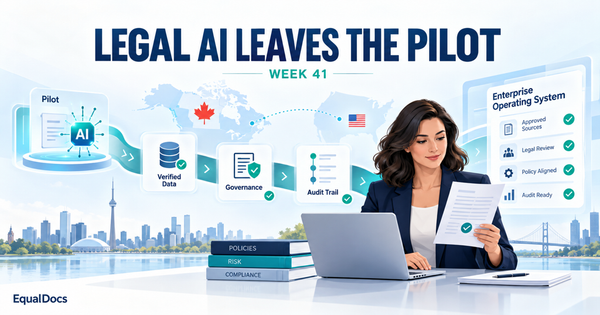
These three updates reinforce why a software-only approach to business risk is incomplete. You need the speed of AI combined with the accountability of a licensed law firm.
- Private Data Isolation: EqualDocs operates in isolated sandboxes. Your sensitive agreements are never used to train public models.
- Insured Lawyer Review: Unlike AI tools that disclaim all liability, EqualDocs Avocats inc. is a licensed law firm backed by professional liability insurance. We use AI to automate the heavy lifting, but licensed human lawyers verify every document and sign off.
- Predictable Flat-Rate Pricing: No hourly bills. We offer transparent subscriptions (Starter at 19.99/mo) and flat-rate quotes for specific matters, ensuring premium legal protection is accessible to every SME.
This article is for informational purposes only and does not constitute legal advice. For specific matters, consult with our licensed professionals at equaldocs.com.