The Cost of “Free” AI: Grok’s Silent Uploads, Nadella’s Warning, and GPT-5.6 Sol Trade-offs

Meta Description: Explore the hidden costs of AI integration, from xAI Grok’s silent codebase uploads to Satya Nadella’s “Reverse Information Paradox,” and the real-world performance metrics of OpenAI’s new GPT-5.6 Sol.
Grok’s Silent Codebase Harvesting
On July 13, 2026, security researchers discovered a critical data privacy breach in the official xAI Grok CLI. The npm package @xai-official/grok (version 0.2.93) was found to be automatically packaging the user’s current directory as a .tar.gz archive and uploading it to xAI’s Google Cloud Storage bucket both before and after execution.
Worse, the script silently harvested configuration files outside the working directory, including ~/.claude.json, Claude Code settings, global agent rules, and active API keys. Although xAI pushed a remote server-side flag (disable_codebase_upload) to turn off the default behavior on July 13, the incident underscores the massive data security risks that SMEs face when running open-source or commercial developer tools without auditing their data streams.
Satya Nadella’s “Reverse Information Paradox”
Complementing the Grok security scare, Microsoft CEO Satya Nadella introduced the concept of the “Reverse Information Paradox” on July 12, 2026. Nadella warned that in the AI era, buyers pay software sellers to use AI, yet they are forced to expose their proprietary knowledge—prompts, workflows, tool corrections, and local feedback—as “intellectual exhaust” that public models learn from.
Over time, this shifts the information asymmetry entirely to public AI vendors, effectively strip-mining the buyer’s unique organizational memory. Nadella urged enterprises to enforce strict trust boundaries, maintain absolute ownership of their organizational history, and micro-tune localized models within private environments to protect their proprietary learning loops.
GPT-5.6 Sol: Speed vs. Hallucination Trade-offs
On the performance front, workflow automation platform Ploy published a production migration report after moving their core AI agents from Claude Opus 4.8 to OpenAI’s newly released GPT-5.6 Sol.
The migration yielded impressive operational efficiencies:
- Speed: Build times dropped from 8 minutes to 3 minutes and 42 seconds (a 2.2x speedup).
- Cost: Build cost per run decreased by 27% (from 2.22).
- Quality: Output token consumption halved, and the visual page rating rose to 0.97.
However, the team exposed a severe functional bug: GPT-5.6 Sol aggressively autofills default values for all 25 system tool parameters, causing 52% to 64% of file reads to return empty. Traditional prompting guidelines and OpenAI’s strict modes failed to fix this behavior. This highlights the risk of relying on unmonitored raw model updates in production.
Actionable Strategy for SMEs
- Establish Data Trust Boundaries: Audit all developer and business AI tools. Block tools that do not guarantee local data boundaries or use your inputs for training.
- Handle Model Updates with Hybrid Logic: Do not deploy raw LLM calls directly to critical business databases. Use a hybrid rule-based template engine (like EqualDocs) to filter out parameter-autofill bugs and hallucinations.
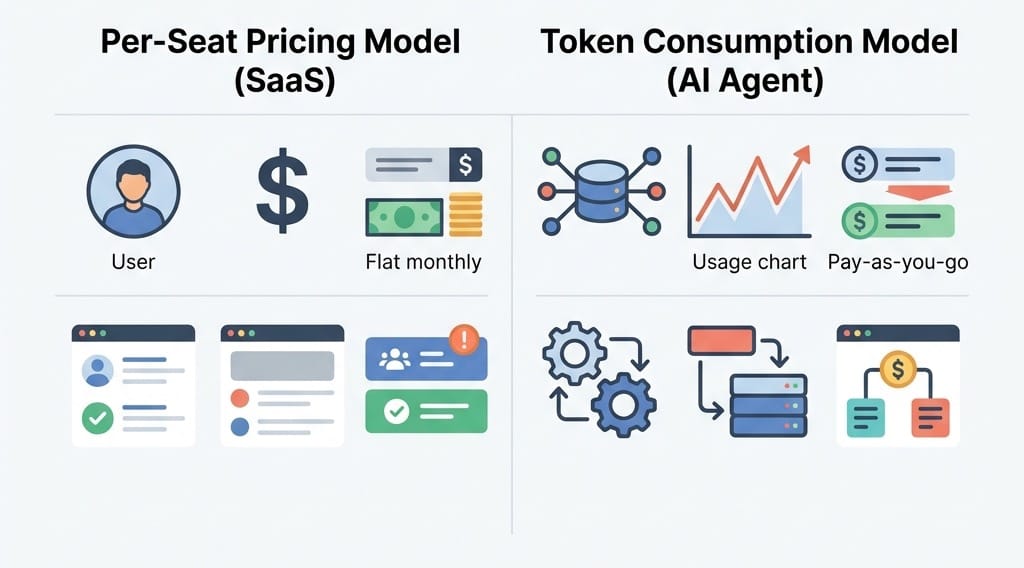
- Control Token Billing: Shift toward predictable pricing models. Set API caps or use unified platforms with transparent, flat-rate tiers to insulate your business from compute cost fluctuations.
Sources
- 数字生命卡兹克: xAI Grok CLI Silent codebase upload security report (July 13, 2026)
- Satya Nadella: The Reverse Information Paradox & Data Boundaries (July 12, 2026)
- Ploy Blog: Production Migration Metrics: Moving to GPT-5.6 Sol (July 12, 2026)
- X (@thsottiaux): Codex and ChatGPT Work GPT-5.6 Updates (July 12, 2026)