Legal AI is Everywhere, but Only 7% Have Fully Implemented It. Here’s Why.

(July 11, 2026)
The legal technology landscape is shifting gears. For the past two years, the conversation has been dominated by the mere existence of generative AI. Today, the focus has abruptly transitioned from “what can it do?” to “how do we safely integrate it?”
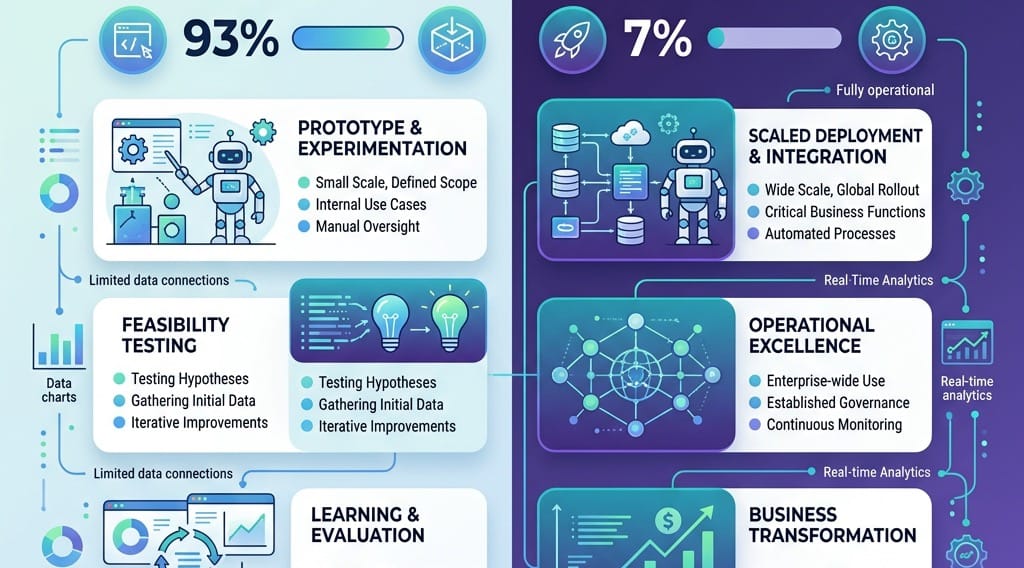
According to a sobering new report released by Axiom this week (Legal AI is Everywhere. Now Comes the Hard Part), while AI is universally accessible, only 7% of legal teams have successfully moved beyond pilot programs to full implementation.
Why is the remaining 93% stuck in the sandbox? The answers lie in a triad of challenges: governance, data privacy, and the transition to autonomous agents.
The Transparency Mandate: Utah Sets the Standard
As the Utah Legal Regulatory Sandbox officially closes to new applications, the state has pivoted its focus to rigorous oversight with its new AI Policy Act. This legislation sets a critical precedent: any generative AI used in regulated occupations (including legal services) must now feature prominent transparency disclosures. If a client is interacting with an AI, they must explicitly be told they are doing so.
This signals a broader regulatory trend. The “move fast and break things” era of legal tech is over. Liability and auditability are now the prerequisites for deployment.
The Rise of Agentic AI: ChatGPT Work
OpenAI’s recent launch of ChatGPT Work further highlights the stakes. We are moving away from conversational chatbots that answer questions, toward “Agentic AI”—systems capable of executing multi-step workflows across applications.
While this promises unprecedented automation for professional services, it introduces massive data flow and permission risks. When an AI can read emails, cross-reference documents, and draft responses autonomously, the attack surface for data breaches expands exponentially.
The Apple v. OpenAI Wake-Up Call
Just yesterday, Apple filed a lawsuit against OpenAI, alleging trade secret theft via former employees using confidential documentation for hardware development. This high-profile dispute is a stark reminder for SMEs and legal teams: if an enterprise like Apple struggles to secure its trade secrets in the AI era, small businesses are exceptionally vulnerable.
The EqualDocs Takeaway: Audit Your SLAs Now
The bottleneck for the 93% of teams stalling on AI implementation isn’t a lack of technological capability—it’s a lack of robust legal safeguards.
Before rolling out AI agents to handle your core operations or client intake, you must ensure your contracts protect your proprietary data.
- Audit Vendor SLAs: Ensure your agreements include strict “anti-training” clauses, preventing AI vendors from using your confidential data to train public models.
- Implement Disclosures: Update your client-facing terms to comply with emerging AI transparency laws, shielding your business from deceptive practice liabilities.
The future belongs to the 7% who learn how to wield AI safely. Don’t let your firm’s data become someone else’s training set.
EqualDocs — Your Digital General Counsel | equaldocs.com