Bridging the Adoption Gap: The Real Cost of Legal Tech in 2026

July 8, 2026
For years, the legal technology sector has been obsessed with buying and launching new tools. Startups built them, law firms bought them, and enterprise compliance teams licensed them. But as we move into the second half of 2026, a critical bottleneck has emerged: user adoption.
Firms are realizing that buying an advanced AI system is useless if lawyers and operational staff continue to rely on traditional, manual workflows. Today’s updates focus on how the industry is addressing this adoption gap, new international partnerships combining AI with human oversight, and the SEC’s shifting regulatory agenda.
1. Harbor Acquires iTrain to Solve the Tech Adoption Bottleneck
In a major consolidation move, professional and technology services firm Harbor has announced the acquisition of iTrain, a UK-based specialist in legal technology training and user adoption. iTrain is highly regarded for helping firms onboard users onto complex document management systems, practice management platforms, and recent generative AI applications.
As law firms and corporate legal departments sink millions into enterprise AI licensing, the actual usage rates of these tools often remain low. By acquiring iTrain, Harbor plans to offer a complete pipeline from software procurement to hands-on employee training.
The “So What” for SMEs:
For small and medium-sized enterprises (SMEs), this acquisition is a valuable reminder: software is only as good as your team’s ability to use it. If you are licensing AI tools for contract review or administrative workflows, do not expect immediate productivity gains without structured training. To get a return on investment, focus on training your team on prompt engineering, verification protocols, and integrating these tools into daily habits.
2. Neur.on and Legal 230 Partner for Swiss-Sovereign AI Translation
Fribourg-based legal tech provider Neur.on has announced a joint partnership with Legal 230, a prominent European legal translation company. The partnership combines Neur.on’s AI-powered translation platform (Corrext) with Legal 230’s network of over 1,500 human legal translators.
This integration addresses two major pain points in international legal operations: speed and data sovereignty. By running the AI models within Swiss-sovereign data centers and adding a human-in-the-loop verification step, the service guarantees compliance with strict data protection regulations while reducing translation timelines.
The “So What” for SMEs:
SMEs handling agreements across multiple regions often struggle with the cost of professional translation. While free public translators are fast, they expose confidential contract data to public AI training models. The Neur.on and Legal 230 model highlights the ideal setup for businesses: using secure, sovereign AI translation for speed, followed by human verification for critical clauses, ensuring data security and professional precision.
3. SEC Atkins Era Begins: Innovation and Regulatory Reform Take Center Stage
SEC Chairman Paul S. Atkins has released the commission’s 2026 Regulatory Agenda, outlining a significant shift in corporate compliance priorities. The agenda places a strong emphasis on regulatory clarity, particularly concerning digital assets, tokenized securities, and the adoption of modern financial technologies.
Under Atkins’ leadership, the SEC aims to streamline compliance frameworks, reduce administrative burdens for growing businesses, and encourage technical innovation while maintaining core investor protections.
The “So What” for SMEs:
A more clear, streamlined regulatory environment from the SEC will make it easier for growing companies to navigate compliance and explore innovative fundraising structures. As capital markets adapt to these new guidelines, SMEs should keep their governance structures and corporate registries standardized and up-to-date, ensuring they are prepared to leverage new compliance tools and capital opportunities.
Actionable Strategy: Maximizing Tech ROI in Your Business
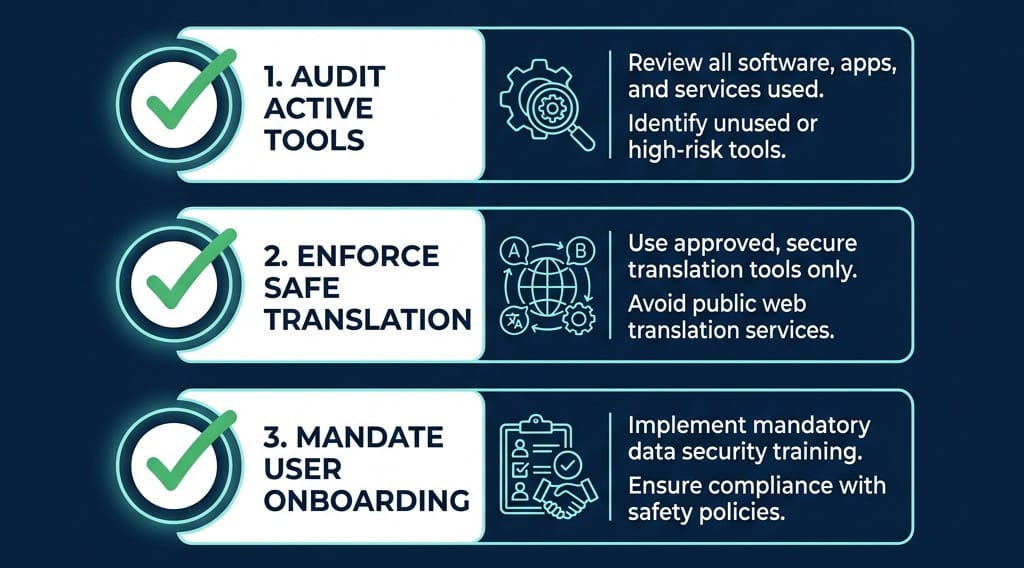
To ensure your business does not fall into the tech adoption trap:
- Mandate Adoption Audits: Before buying another software subscription, audit your current tech stack. If a tool has less than a 50% active usage rate, retrain your staff or cancel the subscription.
- Implement Safe Translation Boundaries: Restrict employees from using free, unencrypted web tools for contract translation. Standardize on secure translation tools that offer data protection.
- Streamline Governance: Keep your company’s corporate templates and agreements organized in a central, secure repository, making it easy to adapt as regulatory changes roll out.
EqualDocs — Your Digital General Counsel | equaldocs.com