Beyond RAG: Why Agentic Workflows are the New Standard for Business and Law (July 10, 2026)

Yesterday’s legal tech news highlighted a major structural shift in how businesses and law firms deploy artificial intelligence. We are officially moving out of the “experimental chatbot” phase and entering the era of autonomous, multi-step AI agents. For small and medium-sized enterprises (SMEs), this change is critical: it means the difference between a tool that merely summarizes text and a workflow that actively executes business operations.
Here are the three major developments from the past 48 hours and what they mean for your business.
1. Smokeball Launches “Archie” Next-Gen Agentic AI Assistant
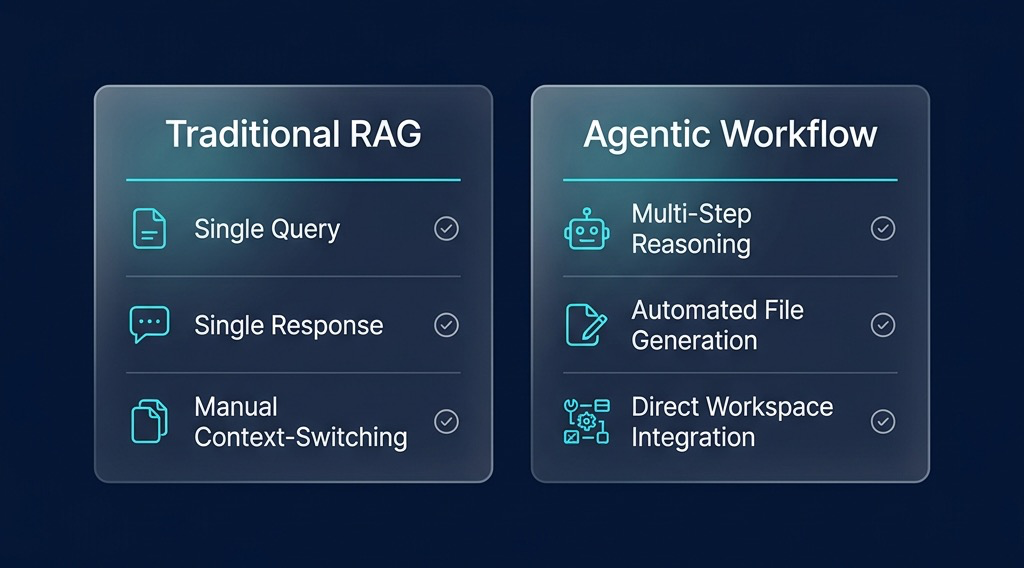
Practice management platform Smokeball has announced a major upgrade to its AI assistant, Archie. In the previous wave of AI adoption, tools relied almost exclusively on basic Retrieval-Augmented Generation (RAG)—meaning you asked a question, and the tool looked up documents to give you a single answer.
The new generation of Archie moves to agentic, multi-step reasoning. Instead of answering a single prompt, Archie can analyze a matter, draft multiple corresponding documents, sync with Microsoft Word and Outlook, and update administrative workflows in sequence.
The SME Takeaway: If you are still using basic chat windows to copy-paste agreement clauses, you are falling behind. True efficiency gains now come from software that integrates directly into your daily workspace (Word, email) and executes multi-step tasks without human intervention between every step.
2. Launch of “Brahe,” the Nordics’ First AI-First Law Firm
In Helsinki, Finland, legal AI pioneer Antti Innanen has launched Brahe, a corporate law firm designed from day one to be “AI-native.” Operating on a custom system built on Anthropic’s Claude, Brahe automates the vast majority of research, contract comparison, and citation generation. The firm’s marketing claims that corporate work which traditionally took three weeks to deliver can now be completed in three days.
Crucially, Brahe is not a software company—it is a licensed law firm. It relies on a “human-in-the-loop” model, where experienced human corporate lawyers review and sign off on every piece of work generated by the AI system.
The SME Takeaway: AI-first law firms represent the future of corporate counsel. They drastically reduce turnaround times and costs while retaining the safety net of human legal liability. For SMEs, this means affordable access to high-quality contract reviews and compliance tracking that was previously reserved for enterprise budgets.
3. Harbor Acquires iTrain to Scale Legal AI Education
The bottleneck for legal AI is no longer the technology—it is user adoption. Recognizing this, legal tech services giant Harbor has acquired iTrain, a company specializing in tech training and AI enablement. The acquisition is specifically designed to help law firms and in-house legal departments train their staff to adopt, trust, and properly verify AI workflows.
The SME Takeaway: Simply buying an AI license for your team does not guarantee efficiency. If your staff does not know how to write proper prompts or—more importantly—how to audit AI outputs for errors, you risk introducing liability. Training is just as important as the tool itself.
What You Should Do Today
As AI becomes more agentic, your business agreements must keep up. Ensure that any vendor or partner using AI agents to process your corporate data has strict parameters around data privacy and security.
At EqualDocs, we build compliance and contract management solutions that protect your business while leveraging the best of agentic technology. Follow us for daily updates on how to secure your business workflows in the age of AI.