From Seats to Tokens: What Shifting AI Models and New Audit Tech Mean for Business Risk

July 12, 2026
As AI transitions from a novelty into the operational plumbing of the modern enterprise, the legal and commercial rules surrounding its adoption are rewriting themselves overnight. This week, we saw massive shifts in how AI is priced, how high-stakes data is audited, and how the legal industry prepares its next generation of talent.
For small and medium-sized enterprises (SMEs), these updates aren’t just industry news—they represent a fundamental shift in how you budget for, secure, and run your business workflows.
The Death of the Predictable SaaS Subscription
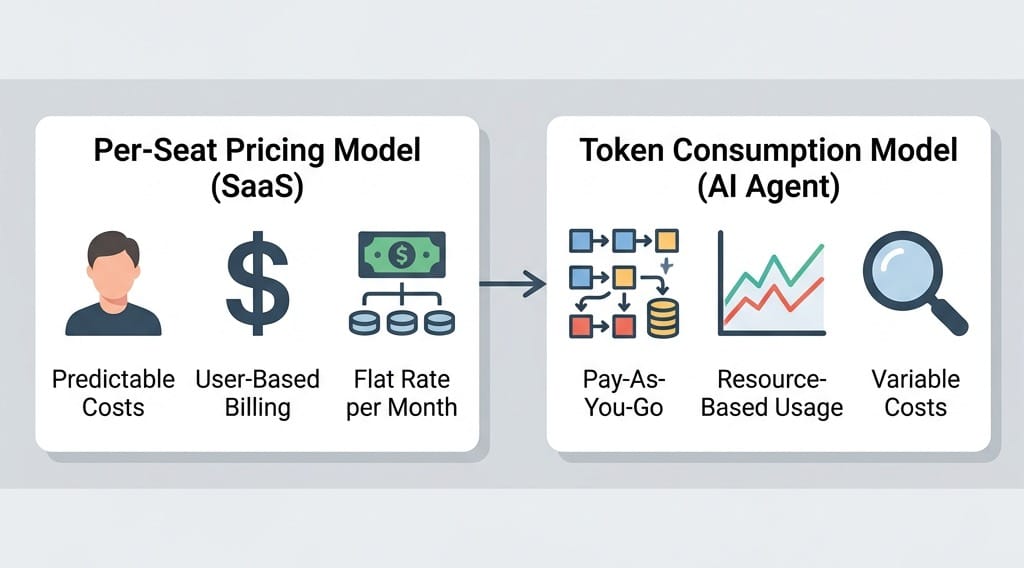
For over a decade, software pricing was simple: you paid 100 per user, per month. You could budget down to the cent. But as AI models evolve from simple chatbots to autonomous “agents” that perform complex, multi-step workflows, that model is breaking.
Gabe Pereyra, co-founder of legal AI giant Harvey, recently revealed that token usage on their platform has surged 14x over the last six months. Running agentic AI—which constantly loops, reads documents, self-corrects, and queries databases—is extremely compute-intensive.
Because fixed seat prices cannot cover the wild variability of this compute cost, the industry is rapidly transitioning to consumption-based pricing (paying per token consumed).
The “So What” for SMEs: Traditional software budgets are predictable. AI budgets will not be. If your operations rely on agentic tools, you could face sudden bill shocks if an agent gets caught in a reasoning loop or processes a massive batch of documents. Businesses must immediately review their vendor agreements to set hard caps on API/token spend and establish internal policies for monitoring AI consumption.
Why “Deterministic” Rules Are Winning Over Generative AI
When it comes to financial audits, taxes, and high-stakes business transactions, AI “hallucinations” are a critical threat. You cannot afford to have a model invent a transaction or miss a bank withdrawal.
This is the exact pain point targeted by Disclosure Assistant, a newly launched legaltech startup. The platform automates the tedious review of PDF bank statements for family law, discovery, and estate administration. Instead of relying on a “black-box” large language model (LLM) to read and summarize statements, Disclosure Assistant relies on deterministic, user-defined rules. Lawyers set specific keyword or dollar-value triggers, and the platform maps them to an audit trail.
The “So What” for SMEs: This highlights a broader trend: in high-risk scenarios, deterministic rules and structured data pipelines are safer and more defensible than raw generative AI. When auditing vendors, verifying payroll, or reviewing tax compliance, seek tools that combine AI’s extraction capabilities with deterministic rules, rather than relying on an LLM’s opinion.
Local Data & AI Resilient Pedagogy
We also saw two institutional shifts that highlight the long-term direction of the market:
- European Data Sovereignty: In Kharkiv, Ukraine, the launch of Y-Park (continental Europe’s first LegalTech and AI innovation hub) kicked off a massive project to digitize 25,000 historical legal volumes to build a localized, European legal AI model. It’s a reminder that general models (like ChatGPT) are heavily biased toward US law, and localized datasets are essential for local compliance.
- AI-Resilient Skills: The University of Chicago Law School announced a pilot program banning laptops, tablets, and phones in first-year (1L) classrooms. The goal isn’t to reject technology, but to foster “AI-resilient pedagogy”—ensuring students develop independent critical thinking, analytical reasoning, and drafting skills before they rely on automated software.
The “So What” for SMEs: For your business, the lesson is twofold. First, ensure your legal and compliance tools are trained on the jurisdictions you actually operate in (e.g., Canadian provincial laws or EU regulations). Second, don’t let AI degrade your team’s baseline competence. A team that doesn’t understand the underlying mechanics of a contract or financial spreadsheet cannot effectively review the AI’s output.
Action Checklist for SMEs Today
- Audit Vendor Pricing: Ask your current AI and productivity vendors if they plan to introduce token-consumption tiers or variable rates.
- Review Data-Use Clauses: Ensure any automated tool parsing financial statements or payroll lists does not store or feed your data back into public training models.
- Train for Critical Review: Implement training that teaches staff how to spot AI errors and hallucinations, treating AI outputs as drafts rather than final products.
EqualDocs — Your Digital General Counsel | equaldocs.com Need help setting up vendor compliance frameworks or drafting data protection policies? Contact us today.