Frontier AI and Vendor Lock-in: What the Latest Legal Tech Shifts Mean for SMEs

Date: August 15, 2026
The legal technology sector is moving fast, driven by frontier AI lab verticalization and platform lock-in. In the last 48 hours, three major developments have highlighted where the industry is heading: Anthropic hired its first-ever Head of Claude for Legal (Harvard JD-PhD Robert Mahari), a new BARBRI survey revealed that law firms are deploying AI faster than they can track behavior or ROI, and legal tech giant Clio announced the termination of its long-standing LawPay payment integration, forcing users onto its proprietary Clio Payments platform.
For small and medium-sized enterprises (SMEs) and startup founders, these shifts highlight the rising complexity of legal operations. While big tech and legacy vendors focus on capturing larger market shares and creating closed ecosystems, the burden of data compliance, costs, and professional liability remains on the business owner.
Here is a breakdown of today’s key legal tech shifts and how they impact your business.
1. Anthropic Hires Head of Claude for Legal
AI lab Anthropic has hired Robert Mahari as its first-ever Head of Claude for Legal. Mahari, a Harvard JD-PhD and former legal tech founder, will lead the deployment and expansion of Claude models across the legal industry. This marks a significant shift: frontier AI labs are no longer just building general-purpose language models; they are directly verticalizing their models for legal workflows, contract analysis, and professional advisory.
The SME Reality Check
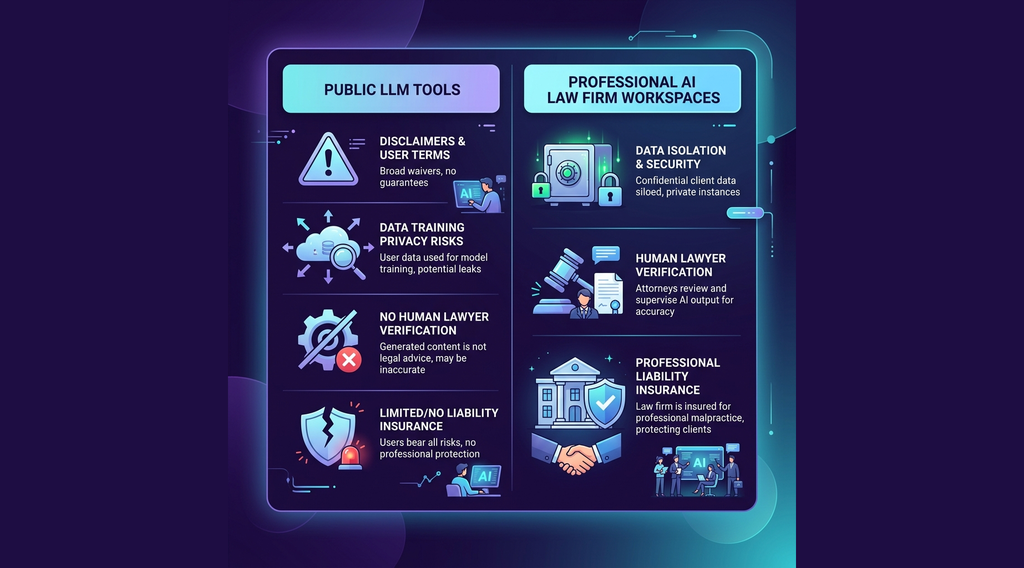
When AI creators verticalize models for legal work, it means general legal assistants will become smarter and cheaper. However, using public AI models for business contracts carries significant risks. Relying on raw public LLMs exposes your “intellectual exhaust” (prompts, proprietary business terms, financial numbers) to public model training. Furthermore, unmonitored updates can suddenly break your prompt templates or integrations.
At EqualDocs, we provide a private legal workspace with strict data isolation agreements. Your business agreements are completely isolated and never used for model training. By combining a hybrid rule-based template engine with secure AI processing, we insulate your business contracts from public LLM bugs and hallucinations.
2. Law Firms Deploy AI Faster Than They Can Measure ROI
A new industry study by BARBRI shows that traditional law firms are deploying AI tools rapidly to keep pace with speed-to-market pressure. However, the study also reveals that firms are struggling to measure changes in lawyer behavior, billable hour adjustments, or actual ROI. In short, traditional firms are adopting AI for marketing and speed, but they have not updated their hourly-rate pricing structures or quality-control metrics.
The SME Reality Check
This gap exposes business clients. If a firm uses AI to draft a contract in 10 minutes but still bills you for 5 hours of traditional lawyer time, you are paying a massive markup for their internal inefficiency. More importantly, because traditional firm lawyers are under pressure to use these tools without clear guardrails, the risk of unverified AI outputs increases, yet traditional tech tools disclaim all liability.
EqualDocs operates on a completely different model. We are a licensed law firm (EqualDocs Avocats inc.) backed by professional liability insurance. We use advanced AI to review, compile, and draft documents at unmatched speed, but our human lawyers verify every output and assume full accountability. We offer clear, upfront flat rates (e.g., Starter for 19.99/mo, or flat-fee custom quotes), ensuring you get AI speed with lawyer-signed protection.
3. Clio to Terminate LawPay Integration on August 31, 2026
Legal practice management platform Clio has notified users that its integration with popular payment processor LawPay (now rebranded as 8am) will conclude on August 31, 2026. Law firms using Clio will be forced to migrate to Clio Payments to maintain integrated billing. This move creates severe vendor lock-in, forcing firms to accept Clio’s transaction rates and terms or manage disconnected invoicing systems.
The SME Reality Check
Vendor lock-in is a classic legacy software play. As legal tech platforms consolidate and force users into closed ecosystems, the increased administrative friction and transactional costs are ultimately passed down to you—the SME client—in the form of higher hourly rates or administrative fees.
EqualDocs is built on openness and affordability. Our platform is designed as an AI-first intake and document assembly space that operates independently of closed legacy practice management loops. We answer two key questions for our clients: “Do you need a lawyer?” and “Who is the right one?” before matching you with a licensed attorney in your jurisdiction with clear, flat upfront quotes.
Bridge the Legal Gap with EqualDocs
As legal tech continues to consolidate and frontier AI models verticalize, business owners need a partner that combines cutting-edge AI capability with professional accountability. With EqualDocs, you get the speed of vertical AI and the peace of mind of a licensed law firm.
EqualDocs — Licensed Lawyers, Amplified by AI.