EqualDocs Daily Brief: Preparing for U.S. Forced Labor Tariffs, the Rise of Specialized Legal AI, and Canada’s Non-Compete Ban

June 11, 2026
Navigating the intersection of cross-border trade, emerging technology regulations, and changing labor laws is a daily challenge for modern small and medium-sized enterprises (SMEs). Today’s legal landscape brings four major developments that require immediate strategic attention: the U.S. Trade Representative’s (USTR) proposed 10% tariff on Canadian goods, Clio’s acquisition of Jurisage to launch Clio Work in Canada, the launch of LegalType AI, and the legislative progression of Canada’s Bill C-31 banning employee non-compete clauses.
Here is the “so what” for your business and how you can adapt your contracts and compliance workflows.
1. Trade: U.S. Proposes 10% Tariff on Canadian Goods Under Section 301
On June 2, 2026, the USTR announced preliminary findings from a Section 301 investigation regarding global forced labor import enforcement. Among the proposed actions is a 10% tariff on Canadian goods (as well as imports from the EU and Mexico). The U.S. determined that while Canada has formal bans on forced labor imports, it has failed to enforce them effectively.
The SME Takeaway
Fortunately, there is a major carve-out: goods that satisfy CUSMA (USMCA) rules of origin are exempt from this proposed tariff.
However, this makes robust supply chain tracing more critical than ever. If your business exports goods from Canada to the U.S., you cannot afford to have a sloppy origin verification process. You must proactively audit your upstream suppliers.
Action Item: Update your upstream procurement contracts. Ensure they include strict “Origin Representations and Warranties,” requiring suppliers to provide comprehensive origin documentation (such as certificates of origin and component tracing). If a supplier’s failure to provide adequate documentation triggers a U.S. customs audit or a tariff penalty, the contract should explicitly hold the supplier liable for all resulting costs and delays.
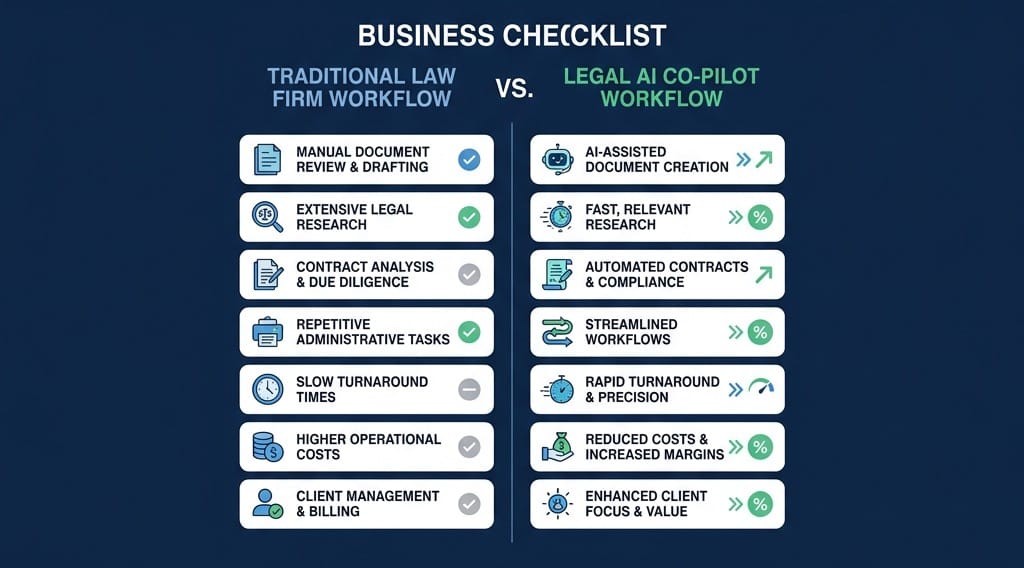
2. LegalTech: Clio Acquires Jurisage & LegalType AI Launches
The legal technology sector is moving rapidly toward specialized, workflow-integrated AI. Today, we see two major moves:
- Clio Acquires Jurisage: Clio announced the acquisition of Jurisage, a Canadian legal AI developer. Clio will integrate Jurisage’s Compass database (which contains over 470,000 cases across 40+ Canadian courts) into its platform, preparing for the Canadian rollout of Clio Work later this year.
- LegalType AI Launches: A new dedicated AI platform, LegalType AI, launched today. The tool is designed to automate high-volume, low-risk legal drafting and document workflows for law firms and corporate legal departments.
The SME Takeaway
These moves highlight a fundamental shift: generic AI chatbots (like ChatGPT) are no longer the standard for legal workflows. The industry is prioritizing context-aware, localized databases (like Clio + Jurisage) and process-specific tools (like LegalType AI) that integrate directly into daily operations.
Action Item: When evaluating legal tech vendor agreements, pay close attention to data privacy, AI training clauses, and local jurisdiction compliance. Ensure your vendor agreements explicitly state that your corporate data will not be used to train public models, and that the AI tool operates under local jurisdiction rules.
3. Employment: Canada’s Bill C-31 Non-Compete Ban Moves Forward
In Ottawa, Bill C-31 (the Budget 2025 Implementation Act, No. 2) is advancing through the House of Commons. The bill includes amendments to the Canada Labour Code that would broadly prohibit non-compete clauses and other restrictive covenants for federally regulated employees (including banking, telecommunications, and transportation sectors).
The SME Takeaway
The ban includes limited exemptions for high-level executives (CEOs) and transactions involving business sales. However, for most federally regulated employers, restrictive non-competes will soon be legally void.
Action Item: Federally regulated businesses should immediately review their standard employment templates. Since non-compete clauses are being phased out, you must strengthen your Confidentiality (NDA) and Intellectual Property (IP) assignment clauses to protect your business. Clearly define what constitutes proprietary trade secrets and client databases, ensuring these assets remain protected even when an employee leaves.
EqualDocs is your digital general counsel. We help you automate cross-border compliance, draft bulletproof business agreements, and manage contract risks in real time. Contact us at equaldocs.com to audit your supply chain and employment templates.