Canada Extends Steel Tariffs; U.S. Overhauls Customs Enforcement; Canada Introduces Safe Social Media Act

Meta Description: Canada extends steel and aluminum quotas to 2027; U.S. issues Executive Order overhauling customs enforcement for importers; Legaltech startup Sandstone raises $30M; Canada introduces Safe Social Media Act.
Trade Protection: Canada Extends Steel & Aluminum TRQs
In a move aimed at protecting domestic producers and maintaining trade alignment with the United States, the Canadian government announced on June 3, 2026, that it is extending its steel and aluminum Tariff-Rate Quotas (TRQ) for one additional year, stretching the policy to June 2027.
The quotas specifically target imports from non-CUSMA partners, keeping tariffs high on third-party metals (such as Chinese steel) while preserving horizontal tariff relief for eligible U.S. and Mexican products. By maintaining these strict quotas, Canada aims to satisfy U.S. demands regarding CUSMA rules of origin and prevent the transshipment of cheap foreign metals through Canadian ports. Exporters shipping metal-heavy goods from non-treaty nations must prepare for continued high duty rates and stringent import documentation checks.
U.S. Customs Overhaul: Stricter Rules for Importers of Record
Crossing the border, the U.S. White House issued an Executive Order on June 3, 2026, that establishes a sweeping overhaul of customs enforcement. The executive order is designed to stamp out import tax and tariff evasion, particularly targeting shell companies and high-risk importers.
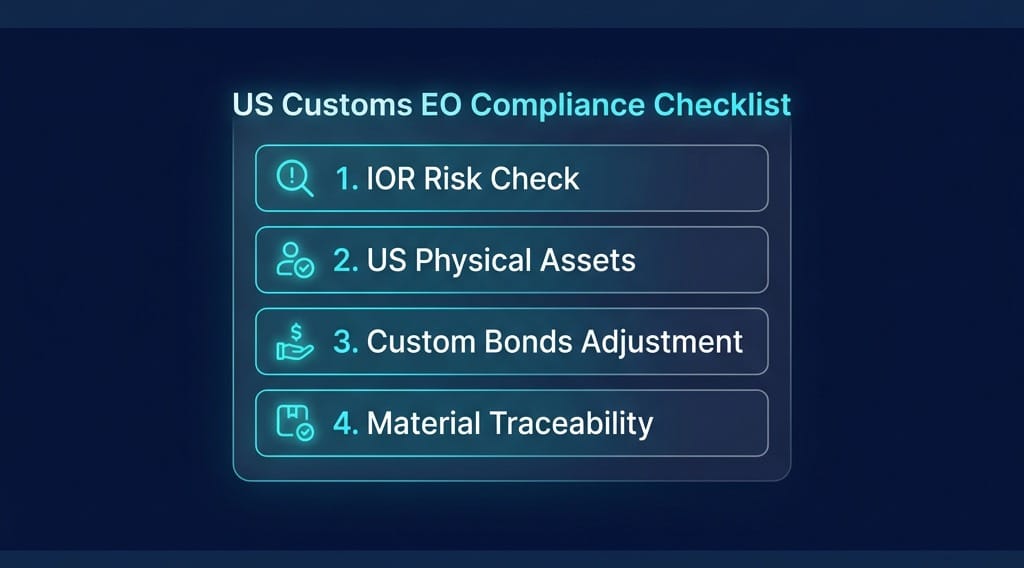
Under the new directives, which will roll out over the next 180 days, the Department of Homeland Security (DHS) and Customs and Border Protection (CBP) will enforce strict requirements on Importers of Record (IOR). These include:
- Tangible Asset Minimums: Importers must maintain a minimum level of tangible assets physically located in the United States.
- Increased Bonding Requirements: CBP is directed to raise the required bond values for high-risk categories to prevent importers from vanishing when penalties are assessed.
- Expanded Data Disclosures: Exporters must disclose detailed transaction and supply chain logs.
For cross-border SMEs, this means higher upfront shipping costs, increased bond premiums, and a significantly higher probability of customs verification audits.
In-House Legal Tech Consolidation: Sandstone Raises $30M Series A
In the legaltech space, investment trends show a massive shift toward specialized corporate workflow systems. On June 9, 2026, Sandstone, a startup developing context-aware AI tools for corporate legal departments, announced a $30 million Series A funding round led by Lightspeed Venture Partners.
This round comes shortly after Wordsmith’s $70 million Series B on June 3, demonstrating that venture capital is consolidating around “agentic AI” platforms. Rather than relying on simple, generic ChatGPT-style chatbots that handle minor drafting tasks, corporate legal teams are adopting platforms capable of securely automating entire contract lifecycles (CLM) and sales redlining within private enterprise networks.
Regulation: Canada Introduces the Safe Social Media Act
On the regulatory front, Canada is executing a major pivot in its AI governance model. Following the launch of the Carney government’s “AI for All” national strategy on June 4, 2026, the federal government officially introduced the Safe Social Media Act in Parliament on June 10, 2026.
This new bill replaces the previously stalled Artificial Intelligence and Data Act (AIDA) framework. Instead of a single omnibus statute, the government is incorporating AI safeguards into existing privacy and safety laws. The Safe Social Media Act specifically targets:
- Chatbot Safeguards: Mandatory safety audits and explainability standards for interactive AI platforms.
- Deepfake Regulations: Strict prohibitions and watermark requirements for synthetic media.
- Child Privacy Protection: Algorithmic rules to restrict profile targeting on youth-centric platforms.
Developers operating AI systems or chatbots in Canada must prepare to audit their datasets and algorithms to comply with these safety and explainability requirements.
Sources
- Government of Canada: Extension of Tariff-Rate Quotas on Steel and Aluminum Imports (June 3, 2026)
- The White House: Executive Order on Strengthening Customs Enforcement and Combatting Import Evasion(June 3, 2026)
- TechCrunch / Lightspeed: Sandstone Secures $30M Series A for In-House Legal AI Workflow (June 9, 2026)
- Parliament of Canada / CBC News: Carney Government Introduces Safe Social Media Act to Regulate AI Chatbots (June 10, 2026)