Navigating the New Normal: Canada’s Tariff Response and the Evolution of Legal AI


May 13, 2026 | EqualDocs Insights
The landscape of global trade and legal technology is moving faster than ever. For small and medium-sized enterprises (SMEs) engaged in cross-border business, staying ahead of regulatory shifts and technological advancements is no longer a luxury—it is a survival skill.
Today, we look at three major developments shaping the market and what they mean for your business.
1. Global Trade: Canada’s Proactive Tariff Response
The Canadian federal government has announced over $82 million in funding partnerships with Nova Scotia and Alberta to support workers and employers in sectors hit hardest by global tariffs (including steel, lumber, and fisheries).
At the same time, International Trade Minister Maninder Sidhu announced a $2 million investment in an economic hub in the Philippines, hinting that negotiations for a free trade agreement could conclude in the coming months.
The Takeaway for SMEs: Supply chains are being reshaped by policy. Cross-border businesses must build flexibility into their contracts. Relying on static agreements is risky; you need dynamic risk isolation and clear clauses handling tariff adjustments.
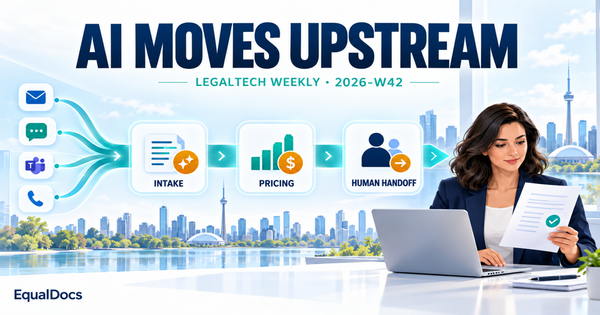
2. Legal Tech: AI Moves Out of the Chat Box
Anthropic just launched “Claude for Legal,” featuring over 20 Model Context Protocol (MCP) connectors to major legal systems like iManage and NetDocuments. It also announced integration with Thomson Reuters CoCounsel.
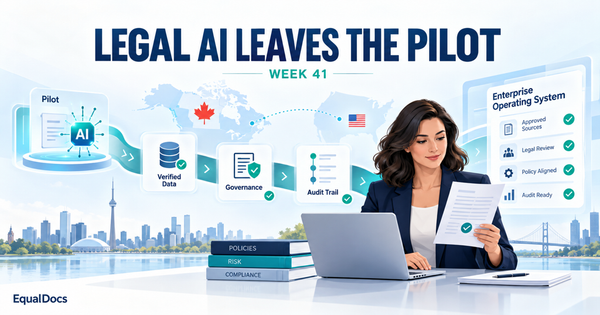
This marks a significant shift in the “Utility Era” of AI. We are moving away from passive chatbots that require you to copy-paste data. The future is workflow-embedded AI that understands your matter context and executes complex operations autonomously.
The Takeaway for SMEs: If you are still manually drafting and reviewing contracts, you are losing time to competitors. AI is becoming standard infrastructure. EqualDocs is positioned precisely here—offering you a “Digital General Counsel” that handles the full workflow from draft to sign.
3. Compliance: Restricting “Stay or Pay” Contracts
On the regulatory front, Connecticut has enacted a sweeping omnibus employment bill that restricts “stay or pay” (training repayment) contracts and expands pay transparency requirements.
The Takeaway for SMEs: Employment contracts are under increasing scrutiny. Clauses that were standard a year ago may no longer be enforceable. Now is the time to review your employment and contractor templates to ensure they align with the latest regional regulations.
EqualDocs provides Global Compliance and Instant Expertise. Draft, review, negotiate, and sign contracts in one integrated AI platform. Try it free at equaldocs.com.