Canada’s Forced Labor Import Ban and EU AI Act Countdown: The Double Whammy of Compliance in 2026

Meta Description: Canada tables tough new forced labor import legislation with reversed burden of proof; EU AI Act countdown to August 2; USMCA joint review scheduled for July 1; LOD and Consilio partner with Wordsmith.
The Shift in Canada’s Supply Chain Enforcement
On June 12, 2026, the Canadian federal government tabled new standalone legislation, the “Ban on Importing Goods Made with Forced Labour Act.” This represents a significant escalation from previous amendments to the Customs Tariff.
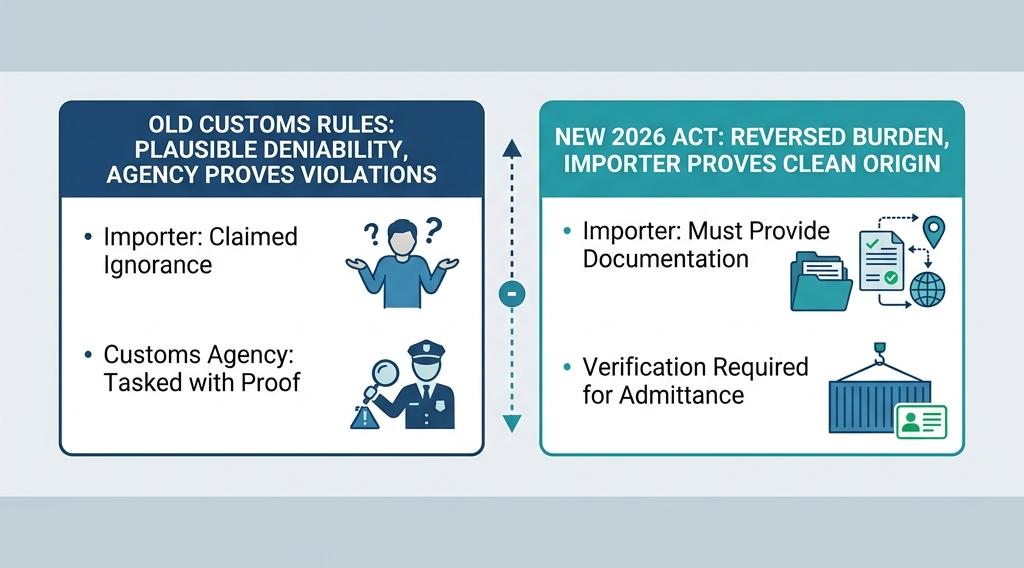
The proposed act establishes a public registry of high-risk goods and suppliers. Crucially, for goods listed on this registry, the legislation shifts the burden of proof to the importer. Importers must provide positive, auditable evidence of supply chain tracing to the Canada Border Services Agency (CBSA) to secure release, or face indefinite detention of their shipments. For Canadian SMEs, this means “plausible deniability” is officially dead; supplier audits must be proactive and legally documented.
EU AI Act: The August 2 Countdown
Meanwhile, global compliance teams are facing the final stretch before the first major enforcement milestone of the EU AI Act on August 2, 2026. On this date, the transparency requirements and specific obligations for general-purpose AI (GPAI) models and high-risk systems become legally binding.
With European regulators signaling zero tolerance and no planned enforcement delays, businesses interacting with the EU market must audit their software and algorithms. Any corporate legal team using or deploying AI-driven systems must verify compliance alignment or risk substantial fines of up to €35 million or 7% of global turnover.
CUSMA/USMCA Joint Review: Tariff Disruption Looms
Further complicating international commerce is the upcoming CUSMA/USMCA 2026 Joint Review scheduled for July 1, 2026. U.S. political leadership has expressed deep skepticism about a straightforward renewal.
If the three nations fail to agree on a 16-year extension, the agreement will enter a complex, highly unstable annual review cycle until 2036. This uncertainty threatens the duty-free status of billions in cross-border trade, making it essential for Canadian and U.S. businesses to review long-term supply agreements and build in protective clauses.
Wordsmith Partners with LOD & Consilio for Managed Delivery
In legal technology, the integration of AI is transitioning from internal firm adoption to client-facing managed delivery. On June 15, 2026, legal outsourcing giants LOD (Lawyers on Demand) and Consilio announced a partnership with Wordsmith, the AI-native workflow platform.
LOD will integrate Wordsmith’s generative AI and contract analysis capabilities directly into its legal managed services model. This partnership enables LOD to deliver high-volume contract reviews and compliance tracking with unprecedented speed, demonstrating how AI is shifting the legal industry from billing by the hour to delivering technology-enabled outcomes.
Strategic Checklist for SMEs and Legal Teams
- Implement Traceability Clauses: Exporters must rewrite supplier agreements to mandate “Reasonable Country of Origin Inquiry” (RCOI) documents and supply-chain mapping assistance.
- Execute Algorithmic Audits: Evaluate any software utilizing AI for compliance with EU transparency frameworks if operating or selling in Europe.
- Draft Tariff Adjustment Terms: Review long-term sales and supply agreements to include tariff-renegotiation triggers ahead of the July 1 USMCA review.
- Leverage AI-Native Managed Services: Review legal service delivery models to incorporate AI-assisted contract review (like the LOD/Wordsmith offering) to reduce legal spend.
Sources
- McCarthy Tétrault / Fasken: Canada Tables Standalone Forced Labour Import Ban Bill (June 12, 2026)
- Artificial Lawyer / EU AI Act Compliance Portal: EU AI Act Countdown to August 2 Enforcement (June 15, 2026)
- Willson International / Bloomberg Law: CUSMA/USMCA Joint Review and Tariff Risks (June 15, 2026)
- LawNext / Artificial Lawyer: LOD and Consilio Partner with Wordsmith to Scale Legal AI (June 15, 2026)